Empowering Young Children to Keep Spaces Tidy

Instilling a tidy-habit in young children isn’t about enforcing strict rules—it’s about nurturing responsibility, clarity and practical life skills from an early age. Here’s how UK families can encourage toddlers and preschoolers to understand, enjoy and maintain tidiness. 

1. Frame tidying as part of the fun

Instead of presenting cleaning up as a chore, present it as the natural follow-up to playtime. After toys, colouring or craft activities, help your child recognise that putting things away means they’ll have more space and time for the next fun activity. This subtle connection helps them understand the logic behind tidying—not simply because an adult says so.

2. Encourage responsibility for their own items

When children learn that the things they play with also belong to them in terms of care, they develop a sense of accountability. For example, after snack time, involve your child in returning their plate to the sink or wiping their table (under supervision). This early practice nurtures good habits around belongings, tidiness, and mutual respect for shared spaces.

3. Lead by example—make tidy-ups a family activity

Children mirror the household culture. If parents regularly clear surfaces, sort toys or hang coats, children come to see this as “just what we do”. Make tidying a shared activity rather than something imposed on the child alone. When everyone participates—from picking up a puzzle piece to folding a cushion—it builds teamwork and frames orderliness as cooperative, not punitive. 

4. Use age-appropriate tools and routines

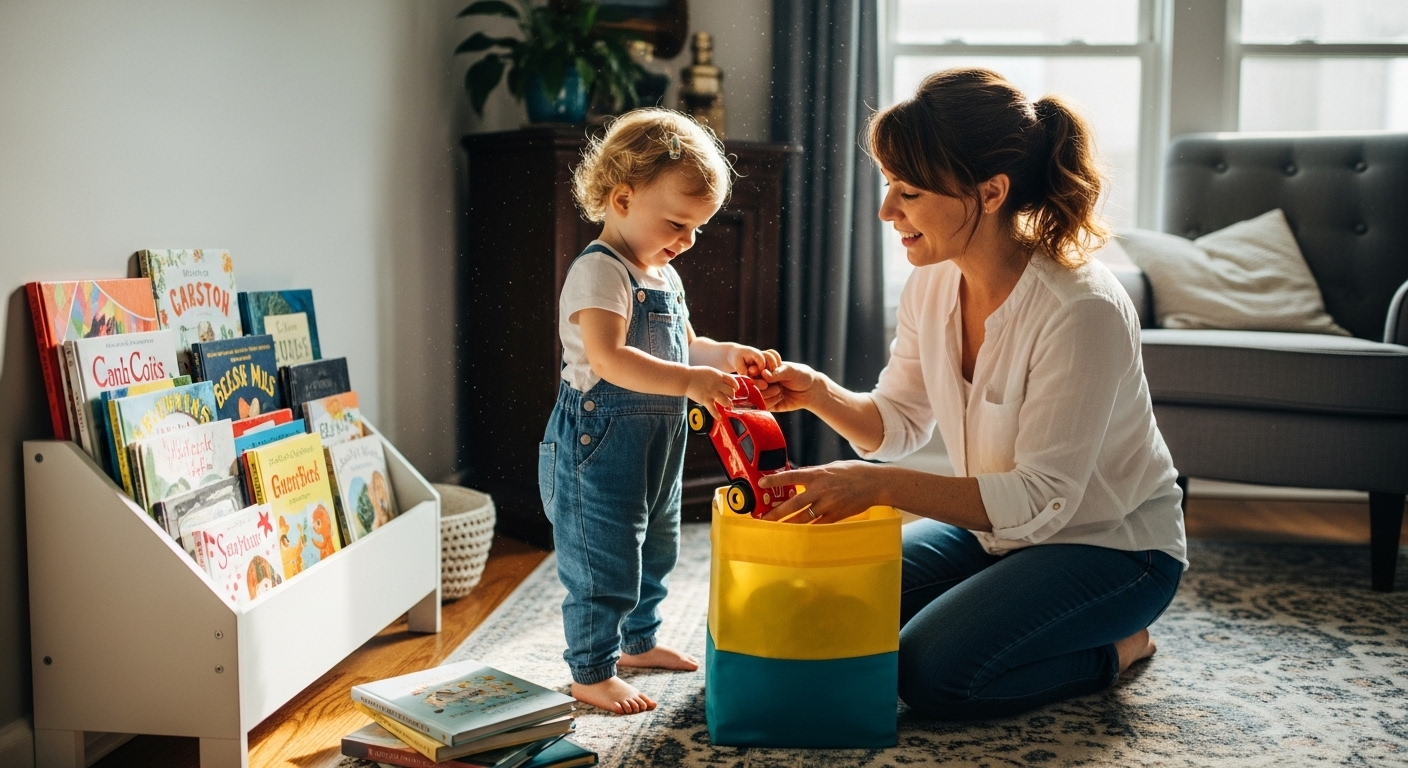
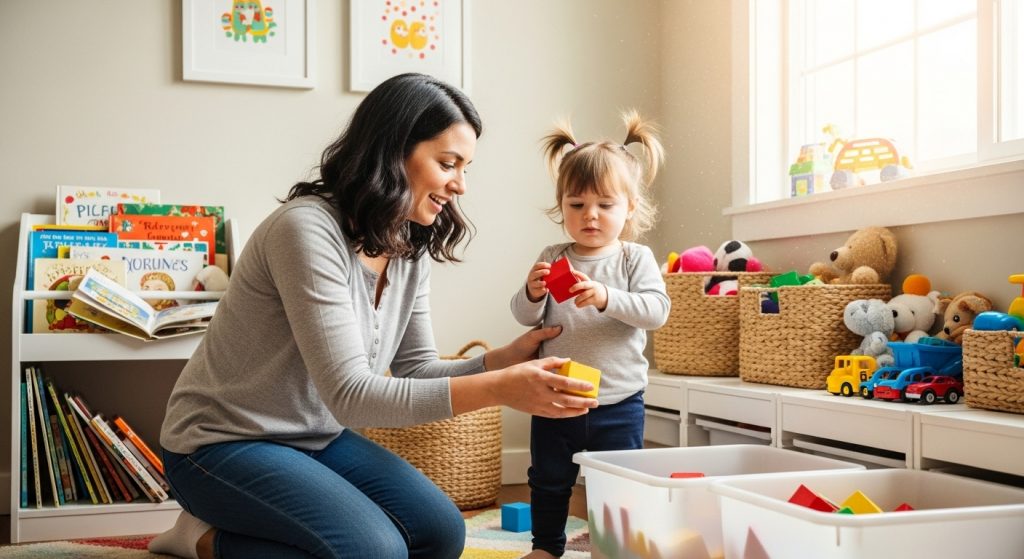
Using clear, child-height storage boxes, labelled baskets, and simple routines helps toddlers grasp what belongs where. Establishing brief, consistent tidying rituals—such as a five-minute “toy tidy” before bedtime—supports their sense of structure, while keeping expectations manageable rather than overwhelming. 

5. Keep language positive and encouraging

Focus on praise like “You did a great job putting all the books back on the shelf” rather than criticism of what’s still out. Encouraging phrases such as “Let’s tidy together so we can find your cars easily tomorrow” help children associate tidying with choice, control and readiness for the next play. The positive feedback loop strengthens their intrinsic motivation.

6. Grow the mindset gradually

Caring for one’s environment is a life skill that blossoms over time. For very young children, the goal is minimal: maybe putting away one toy before fetching another. As they grow, you can add steps like hanging up their coat, placing shoes neatly, or stacking cushions. Recognise progress, not perfection—and make room for the odd spill or scatter (it’s part of childhood!).

Final thoughts

Building good tidying habits is less about imposing order and more about helping children understand the value and logic of care for their space. With consistent routines, shared responsibility, positive encouragement, and appropriate tools, parents can turn tidying from a battle into a natural and empowering part of everyday life.

If you’re ready to give your child a nurturing, creative, and joyful start, consider 4Kidz Childcare—where little ones explore, learn, and grow every day.    

👉 Ready to book a visit? Fill out the Famly Enquiry Form and our nursery staff will contact you. 

You can also reach us on 01707 817 404 or info@4kidzchildcare.co.uk

Share this post:

Recent Blog Posts

  • All Posts
  • Blog
  • News
  • Uncategorised

Categories